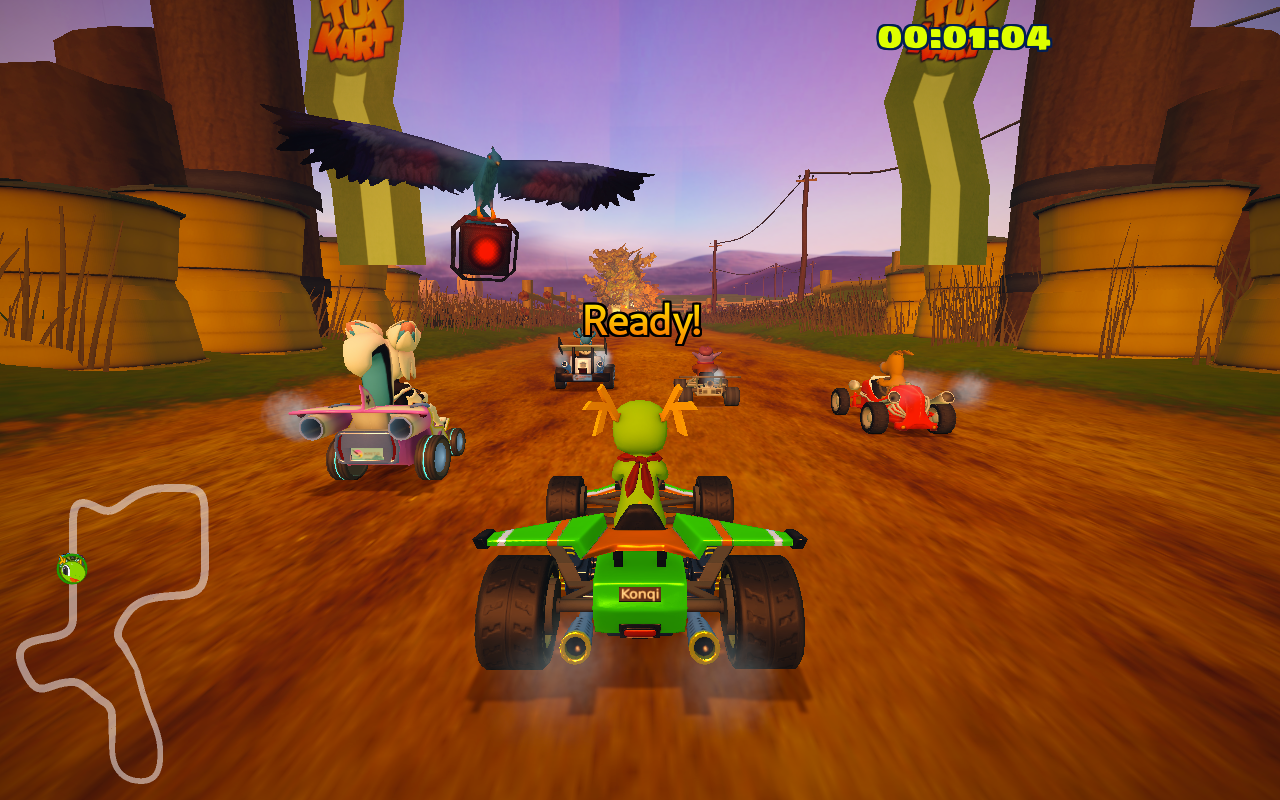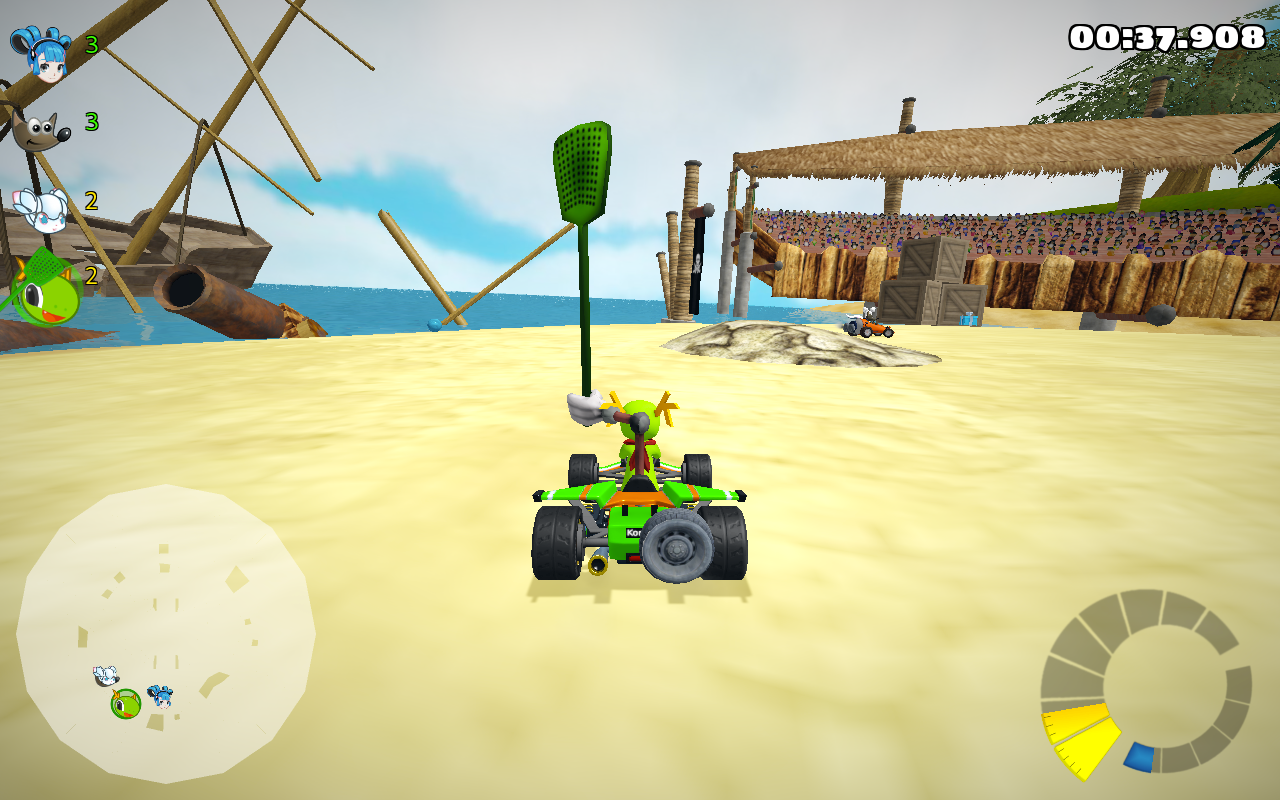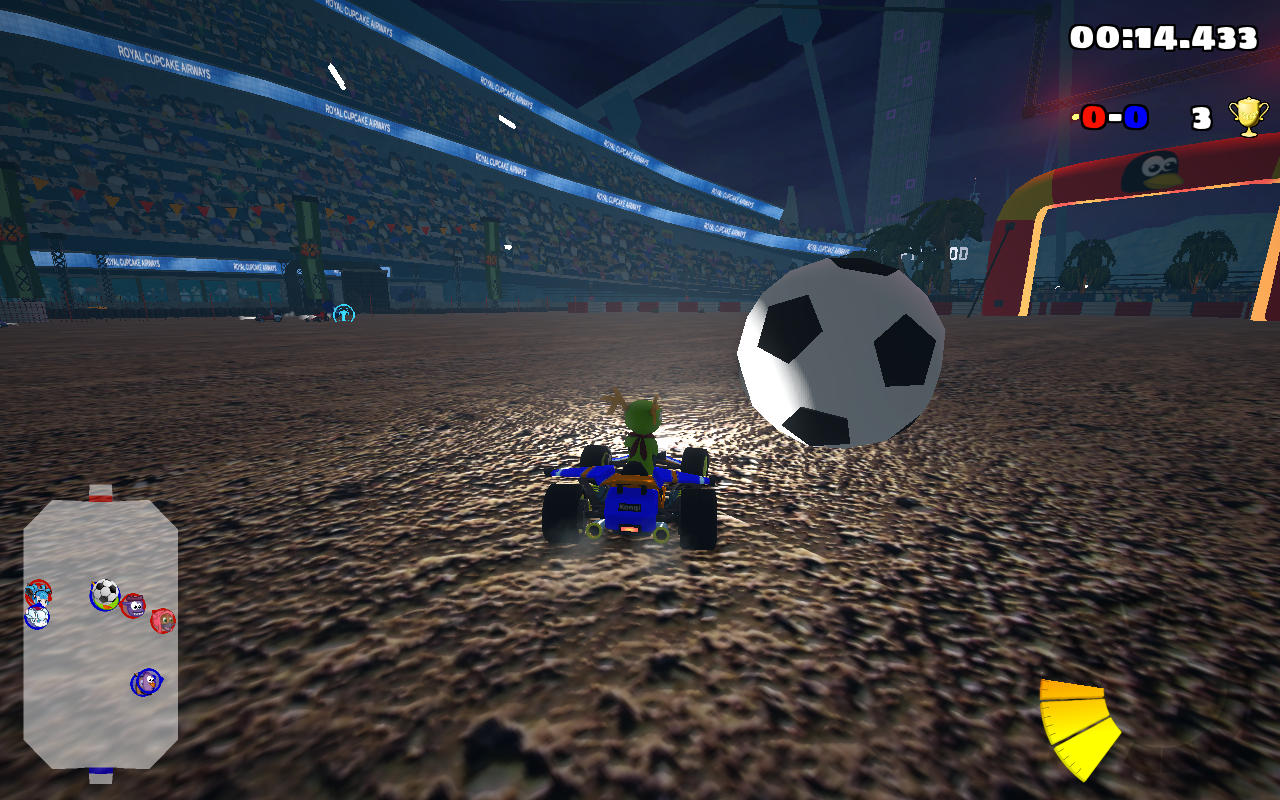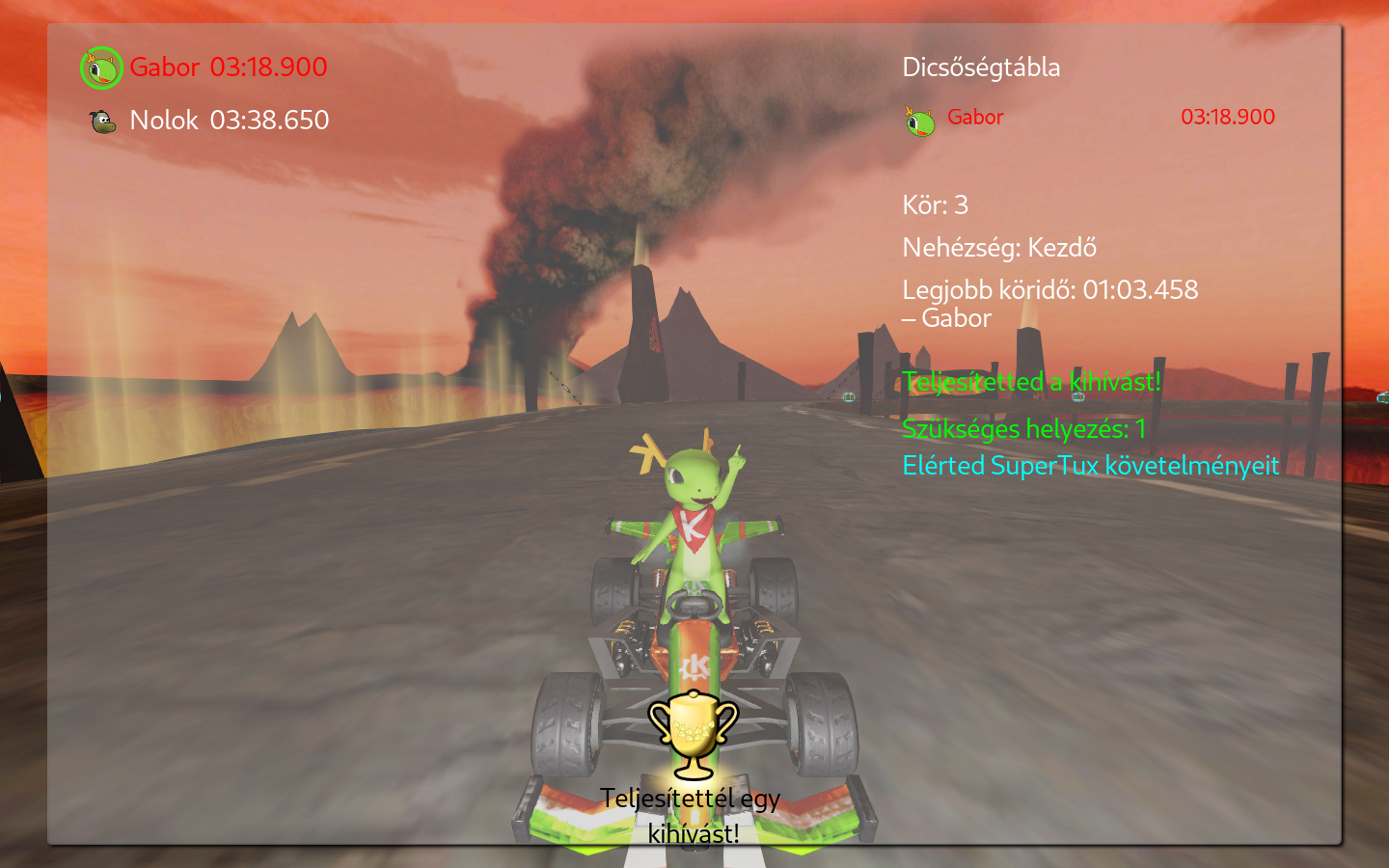
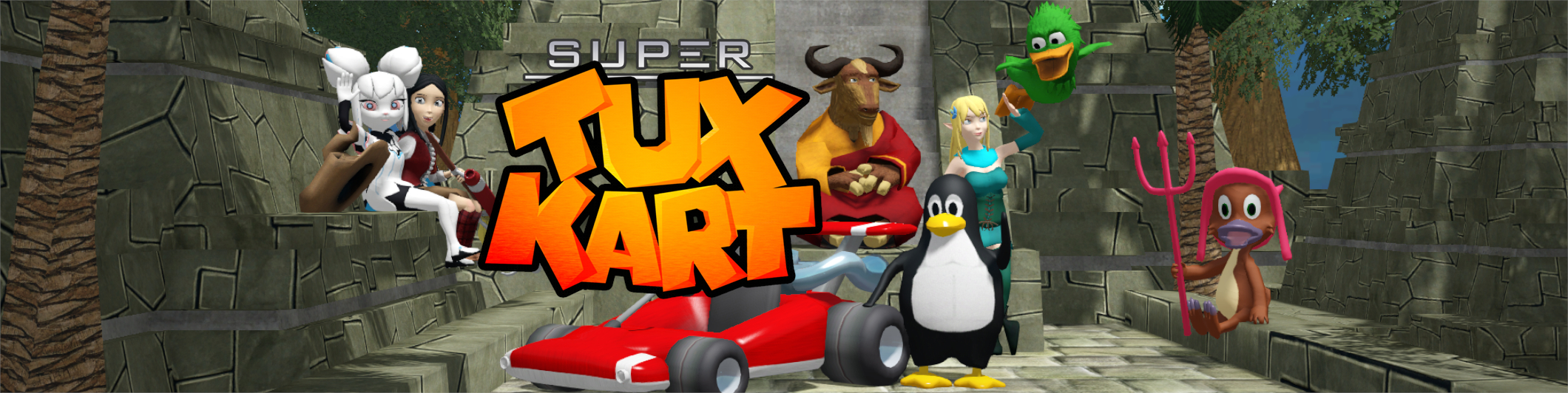
SuperTuxKart is one of the most popular and complex 3D racing games in the open-source world.
The game started as a fork of TuxKart, which was originally developed by Steve and Oliver Baker in 2000.
Since then, it has evolved far beyond a simple Mario Kart clone.
Over the past two decades, the developer community behind it has created a unique software ecosystem that is unparalleled among free software projects in terms of both its technical and graphical solutions.
1. The Evolution of the Engine: The Antarctica Revolution
The most significant milestone in the technical history of SuperTuxKart was the complete replacement of the graphics engine, which radically distinguishes the older versions from the modern branch.
The Irrlicht Era (The Classic Era)
Early versions of the game (up to the end of the 0.8.x branch) were built on an open-source 3D engine called Irrlicht. Although this engine ensured stable performance even on weaker hardware, its graphical capabilities (fixed lighting models, limited shadow handling) limited the game’s visual development.
The Antarctica Engine (The Modern Era)
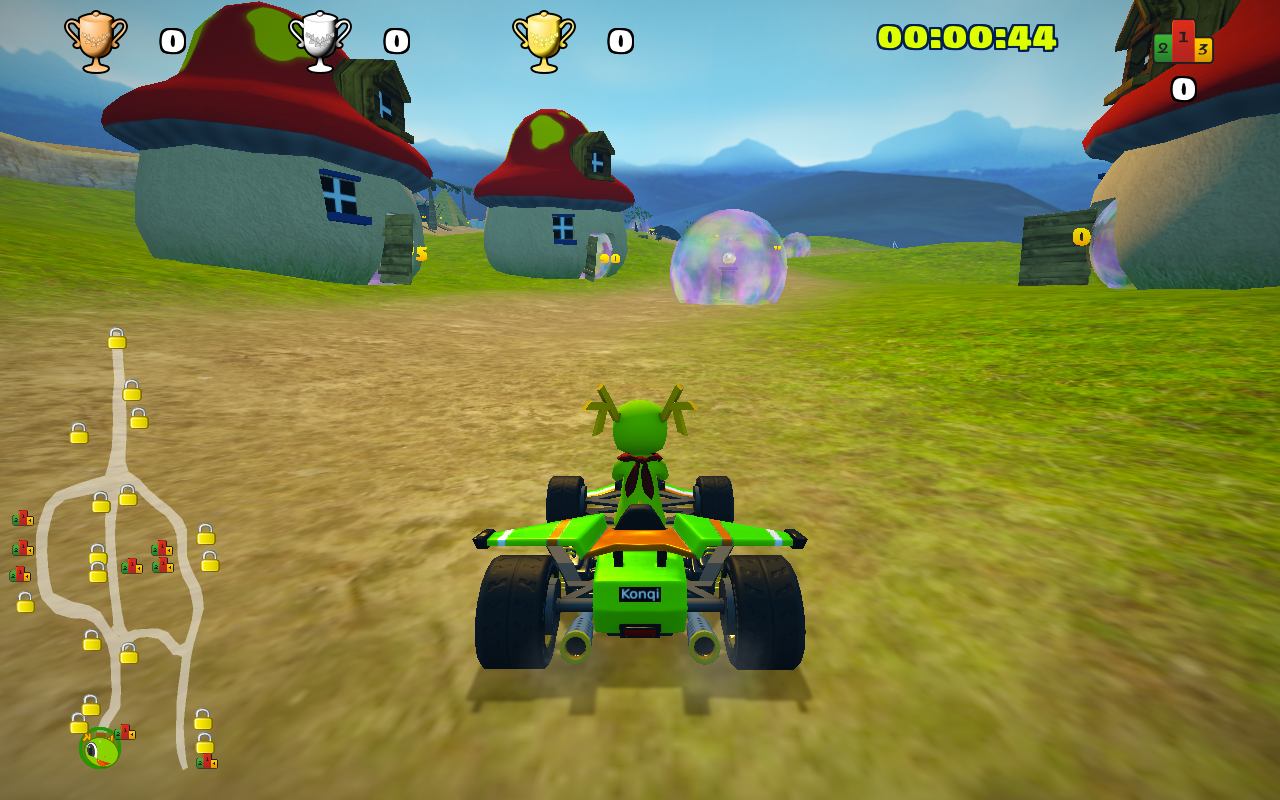
With version 0.9 (2015), the developers introduced a deeply customized and modernized fork of the Irrlicht engine, complete with a brand-new rendering pipeline dubbed Antarctica.
- Deferred Rendering: It allowed for an almost unlimited number of dynamic light sources (lamps, explosions, glowing lava) to appear on the levels without a drastic drop in performance.
- PBR (Physically Based Rendering) effects: Textures now realistically react to light (metallic sheen, matte surfaces, rough rocks).
- Advanced shaders: Built-in Screen Space Ambient Occlusion (SSAO), dynamic motion blur, and depth of field.
2. Technical Background: The Flexibility of C++ and AngelScript
SuperTuxKart’s internal structure is a prime example of modern, modular software architecture:
- High-level C++ and API support: The game’s core is written in high-performance C++.
It is extremely flexible in terms of graphics APIs: it requires OpenGL 3.3+ on desktop platforms, supports OpenGL ES 3.0 for mobile and embedded devices, and features a modern Vulkan subsystem in its latest iterations. - AngelScript (The track logic engine): SuperTuxKart uses a C++-oriented scripting language called AngelScript. Every interactive element that occurs on the tracks (moving bridges, traps, laser gates, story mode challenges, and transition animations) is written in AngelScript. This ensures that track designers do not have to recompile the entire C++ source code for every single logic change.
- Network architecture (WAN/LAN multiplayer): The online multiplayer mode introduced in version 1.0 is built on a custom synchronization protocol that minimizes network latency (lag) and efficiently handles client-side prediction for physical collisions.